Eccentric Art of Dali
Dedicated Web Shop for Salvador Dalí

In Short
I designed a web-shop aimed at selling prints from the famous surrealist artist Salvador Dali. This website allows his art pieces to stand out by keeping a minimalistic aesthetic. I took on this project to create a space where artist appreciators can easily purchase and view his works.
Product:
Product:
E-commerce
E-commerce
Year:
Year:
2024
2024
Role:
Role:
UX/UI Design
UX/UI Design
Skills:
Skills:
User Research, Interactive Prototype, End-to-end Design
User Research, Interactive Prototype, End-to-end Design
Key screens
The
Problem
Many fans of Salvador Dalí want a curated, trustworthy place to browse and purchase art prints, but existing print shops often feel impersonal, overly commercial, or disorganized. Without a dedicated, well-designed platform, potential buyers can struggle to find the right piece, understand different editions (lithographs, engravings, etc.), or trust the quality and presentation of the prints.
Solution
Overview
To solve this, I designed and built a custom e-commerce website specifically for Dalí art prints. The site offers a tailored, visually rich experience that respects the surreal and eccentric spirit of Dalí’s work, while providing clarity for buyers. It combines clean UX with thoughtful curation, helping users navigate through different print types, sizes, and editions in a way that feels trustworthy and artistic.
The
Research
During my research process for this project, I wanted to focus on looking at competitor websites that sell art prints from famous and renowned artists of our time. Many e-commerce sites that I found were drop-shipping platforms where they sell cheap prints in multiple forms such as shirts, mugs, phone cases, etc. This is very unethical and promotes consumerism, as it takes away from the artists' works and sell them for a very cheap price. Additionally, the quality of these products are far from desirable.
My design aims to target this problem, by creating a platform dedicated to a single artist that sells their prints in high quality and donates a part of the profits to a charitable organisation. While my design does not focus on the organisational part, it played a role in my decision making for the concept.
Key
Insights
Ethical Consumer Demand
In researching competitors, I found many “print shops” were actually drop-shipping low-quality Dalí-themed merchandise. Users you tested with cared about authenticity, quality, and ethical sourcing.
Minimalism Enhances Artwork
Dalí’s work is visually complex; My research reinforced that a minimal website design helps prevent cognitive overload — letting the art itself take center stage.
The
Challenge
How might we create a space where art lovers can access high quality prints without buying from unethical sources?
The
Ideation Process
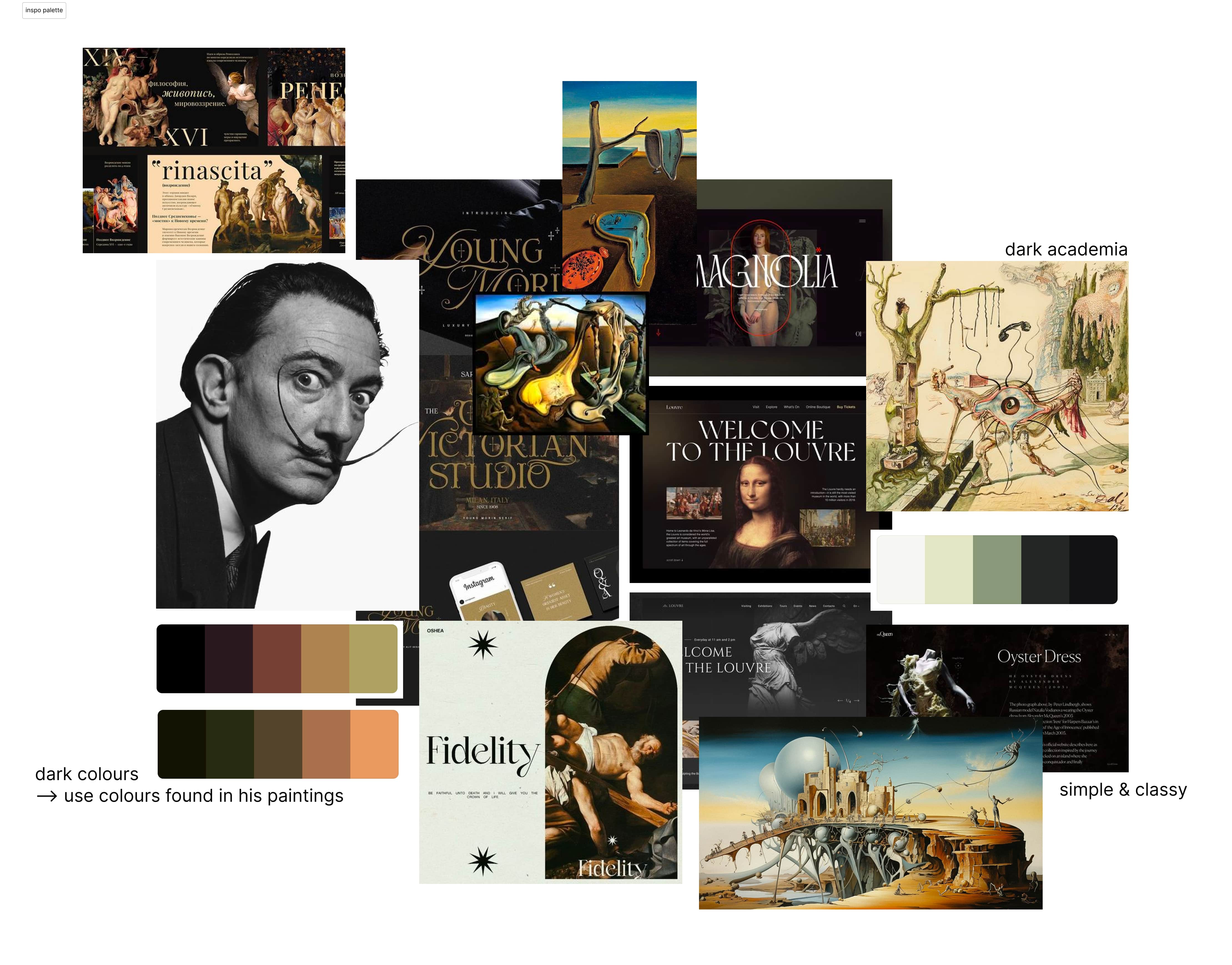
I always start my projects by creating a visual/ concept board, so that I can capture the overall aesthetic that I am designing for. In this instance, I wanted to focus on creating a minimalistic website concept, so that the art pieces can stand out. Salvador Dali is known for his surrealist and colourful paintings; I saw the need to let them stand out on their own, as a colourful web design would clash with the works and potentially overwhelm the user. When choosing for the colour palette, I tried to incorporate colours that appear throughout his pieces, so that the website could still complement his works.

The
Low Fidelity Prototype
After conceptualising the main features and flow of the website, I moved on to making a lo-fi prototype that is a combination of a few of the sketches I made previously. I proceeded to conduct a quick testing with a few users. The feedback I received was mostly positive, but I need to iterate on a few layout decisions I made. Mainly, the users felt that the shop section should be on a separate page rather than in the home page. The shop section being placed below the 'about the artist' section, felt unfitting and made the artist section feel displaced and random.

The
Solution
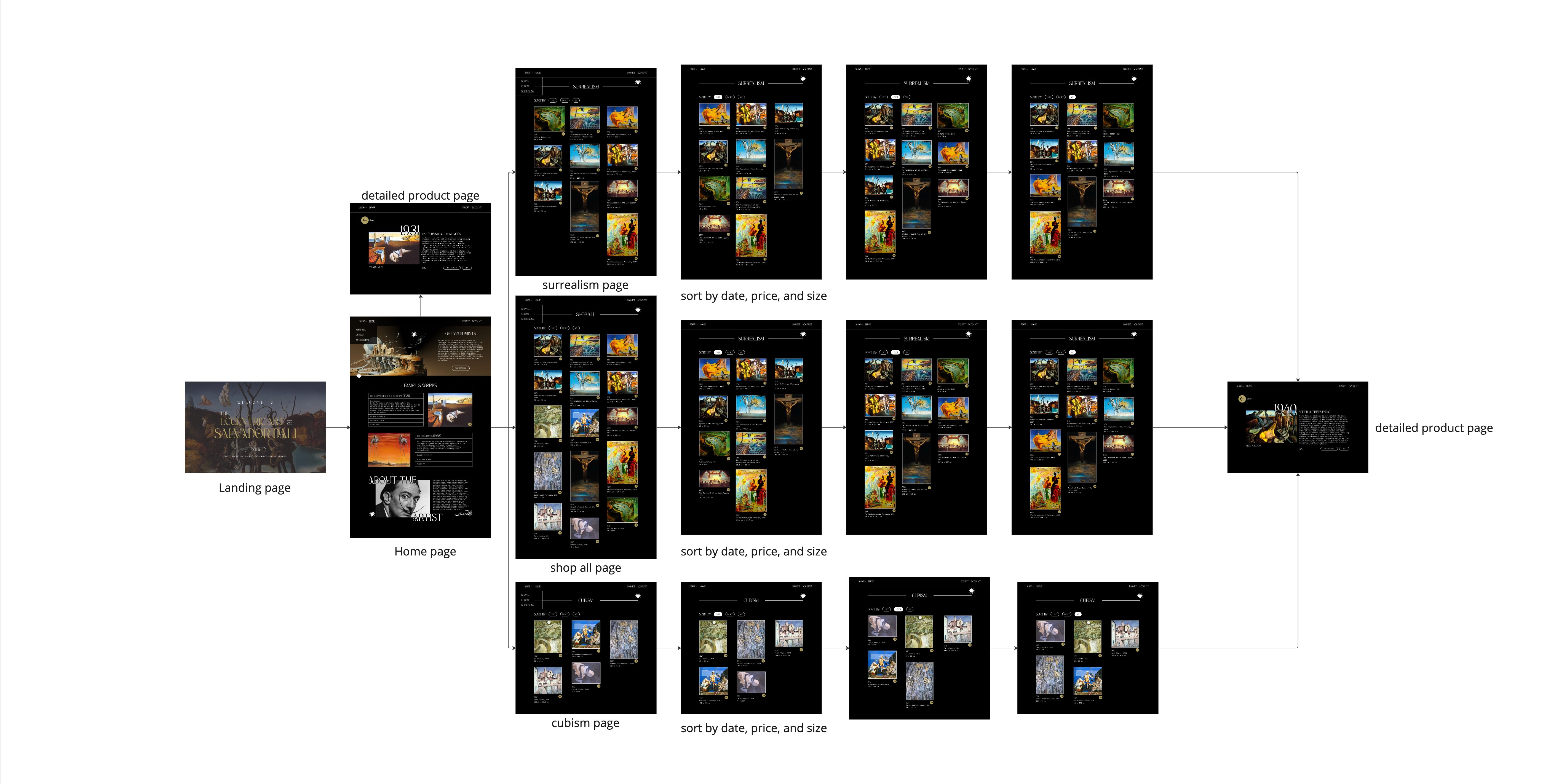
To address this challenge, I designed a clean and trustworthy online platform where art lovers can explore and purchase high-quality, authentic prints from Salvador Dalí. The goal was to create a space that not only celebrates the artist’s legacy but also ensures transparency and credibility in the buying process. The final design features a refined gallery layout, clear artwork categorization, and detailed product pages highlighting authenticity information and print quality. Once I gathered feedback on my low-fidelity prototype, I made several iterations before developing a high-fidelity interactive prototype that was met with positive responses. To further clarify the structure of the site, I also created a user flow chart, making it easy to understand how each page connects within the overall experience. The result is a visually elegant, user-friendly platform that combines artistic appreciation with ethical accessibility.
Reflection
Through this project, I gained a deeper understanding of the importance of layout and structure in web store design. The final result met all the expectations I set for myself, successfully capturing the minimalistic aesthetic I envisioned while celebrating Salvador Dalí’s eccentric artistic spirit. My goal was to design a website that embraces the surreal, imaginative qualities of his work while maintaining a clean and engaging user experience.
The landing page was designed to immerse visitors in a space dedicated entirely to Dalí, inviting them to feel part of his artistic world. Upon entering the homepage, users are greeted with a short introduction that explains the purpose of the site before they explore further. As they navigate, they can discover more about Dalí’s life and browse his most iconic works. Each product page includes essential details such as the title, date, and description, allowing users to connect with the artwork in a meaningful way.
I learned…
that the importance always lies in user feedback and constructive criticism. Coming from an art background, I was introduced to critique early on and came to understand that it is essential for creative growth. This project reminded me that feedback is not a setback but a tool for refinement. The honest criticism I received from peers and tutors helped me push beyond my comfort zone, improve my design decisions, and strengthen my understanding of how to create meaningful, user-centered experiences.
[NEXT PROJECT]
Eccentric Art of Dali
Dedicated Web Shop for Salvador Dalí
In Short
I designed a web-shop aimed at selling prints from the famous surrealist artist Salvador Dali. This website allows his art pieces to stand out by keeping a minimalistic aesthetic. I took on this project to create a space where artist appreciators can easily purchase and view his works.
Product:
E-commerce
Year:
2024
Role:
UX/UI Design
Skills:
User Research, Interactive Prototype, End-to-end Design
Key screens
The
Problem
Many fans of Salvador Dalí want a curated, trustworthy place to browse and purchase art prints, but existing print shops often feel impersonal, overly commercial, or disorganized. Without a dedicated, well-designed platform, potential buyers can struggle to find the right piece, understand different editions (lithographs, engravings, etc.), or trust the quality and presentation of the prints.
Solution
Overview
To solve this, I designed and built a custom e-commerce website specifically for Dalí art prints. The site offers a tailored, visually rich experience that respects the surreal and eccentric spirit of Dalí’s work, while providing clarity for buyers. It combines clean UX with thoughtful curation, helping users navigate through different print types, sizes, and editions in a way that feels trustworthy and artistic.
The
Research
During my research process for this project, I wanted to focus on looking at competitor websites that sell art prints from famous and renowned artists of our time. Many e-commerce sites that I found were drop-shipping platforms where they sell cheap prints in multiple forms such as shirts, mugs, phone cases, etc. This is very unethical and promotes consumerism, as it takes away from the artists' works and sell them for a very cheap price. Additionally, the quality of these products are far from desirable.
My design aims to target this problem, by creating a platform dedicated to a single artist that sells their prints in high quality and donates a part of the profits to a charitable organisation. While my design does not focus on the organisational part, it played a role in my decision making for the concept.
Key
Insights
Ethical Consumer Demand
In researching competitors, I found many “print shops” were actually drop-shipping low-quality Dalí-themed merchandise. Users you tested with cared about authenticity, quality, and ethical sourcing.
Minimalism Enhances Artwork
Dalí’s work is visually complex; My research reinforced that a minimal website design helps prevent cognitive overload — letting the art itself take center stage.
The
Challenge
How might we create a space where art lovers can access high quality prints without buying from unethical sources?
The
Ideation Process
I always start my projects by creating a visual/ concept board, so that I can capture the overall aesthetic that I am designing for. In this instance, I wanted to focus on creating a minimalistic website concept, so that the art pieces can stand out. Salvador Dali is known for his surrealist and colourful paintings; I saw the need to let them stand out on their own, as a colourful web design would clash with the works and potentially overwhelm the user. When choosing for the colour palette, I tried to incorporate colours that appear throughout his pieces, so that the website could still complement his works.
The
Low Fidelity Prototype
After conceptualising the main features and flow of the website, I moved on to making a lo-fi prototype that is a combination of a few of the sketches I made previously. I proceeded to conduct a quick testing with a few users. The feedback I received was mostly positive, but I need to iterate on a few layout decisions I made. Mainly, the users felt that the shop section should be on a separate page rather than in the home page. The shop section being placed below the 'about the artist' section, felt unfitting and made the artist section feel displaced and random.
The
Solution
To address this challenge, I designed a clean and trustworthy online platform where art lovers can explore and purchase high-quality, authentic prints from Salvador Dalí. The goal was to create a space that not only celebrates the artist’s legacy but also ensures transparency and credibility in the buying process. The final design features a refined gallery layout, clear artwork categorization, and detailed product pages highlighting authenticity information and print quality. Once I gathered feedback on my low-fidelity prototype, I made several iterations before developing a high-fidelity interactive prototype that was met with positive responses. To further clarify the structure of the site, I also created a user flow chart, making it easy to understand how each page connects within the overall experience. The result is a visually elegant, user-friendly platform that combines artistic appreciation with ethical accessibility.
Reflection
Through this project, I gained a deeper understanding of the importance of layout and structure in web store design. The final result met all the expectations I set for myself, successfully capturing the minimalistic aesthetic I envisioned while celebrating Salvador Dalí’s eccentric artistic spirit. My goal was to design a website that embraces the surreal, imaginative qualities of his work while maintaining a clean and engaging user experience.
The landing page was designed to immerse visitors in a space dedicated entirely to Dalí, inviting them to feel part of his artistic world. Upon entering the homepage, users are greeted with a short introduction that explains the purpose of the site before they explore further. As they navigate, they can discover more about Dalí’s life and browse his most iconic works. Each product page includes essential details such as the title, date, and description, allowing users to connect with the artwork in a meaningful way.
I learned…
that the importance always lies in user feedback and constructive criticism. Coming from an art background, I was introduced to critique early on and came to understand that it is essential for creative growth. This project reminded me that feedback is not a setback but a tool for refinement. The honest criticism I received from peers and tutors helped me push beyond my comfort zone, improve my design decisions, and strengthen my understanding of how to create meaningful, user-centered experiences.
[NEXT PROJECT]